Stargate Reference Information

This article will discuss three related designs; the versions seen in the original 1994 movie, as well as the two TV shows Stargate SG-1 and Stargate Atlantis. The design seen in Stargate Universe is entirely original, so it’s out of my scope. I want to go over not only the key features of the design, but also subtle differences that are sometimes missed when artists create the different variations.
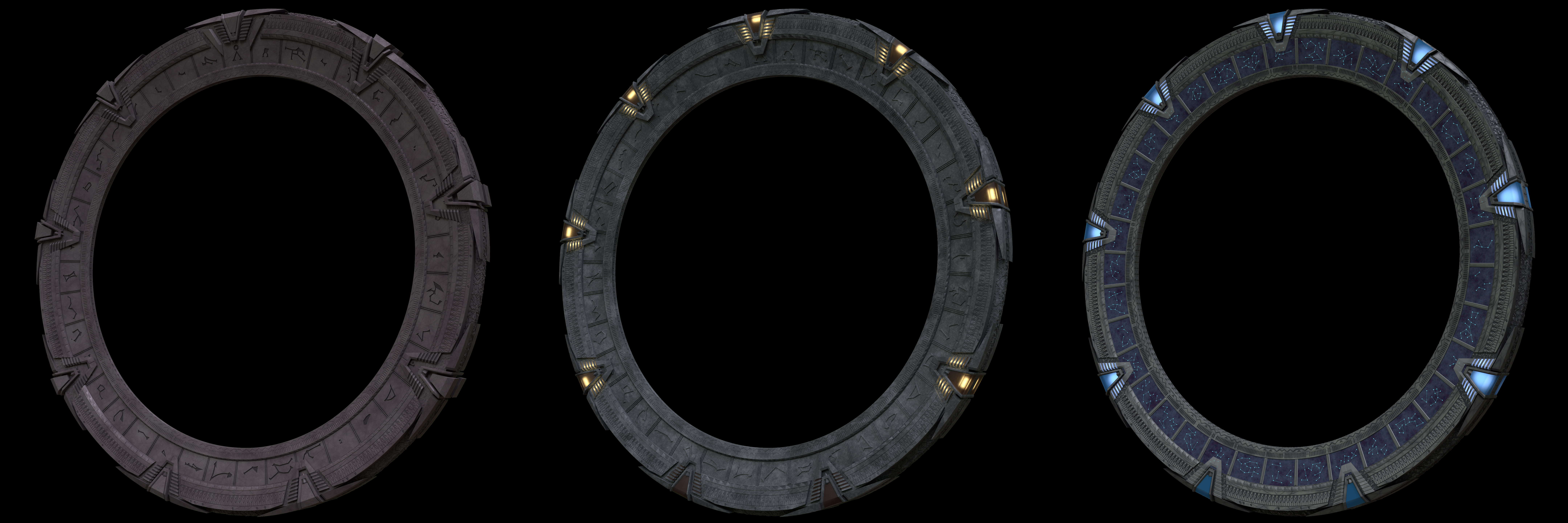
The TL;DR is that the SG-1 stargate is a modification of the film stargate, so if you’re building either of those versions, you can source them both for reference material. The Atlantis stargate was built from scratch, so if you reference the SG-1 stargate while building that one (or vice-versa), you’ll run into confusing contradictions in terms of exact shapes and details. Despite how similar the Atlantis version looks to its predecessors, you can’t assume it matches them.

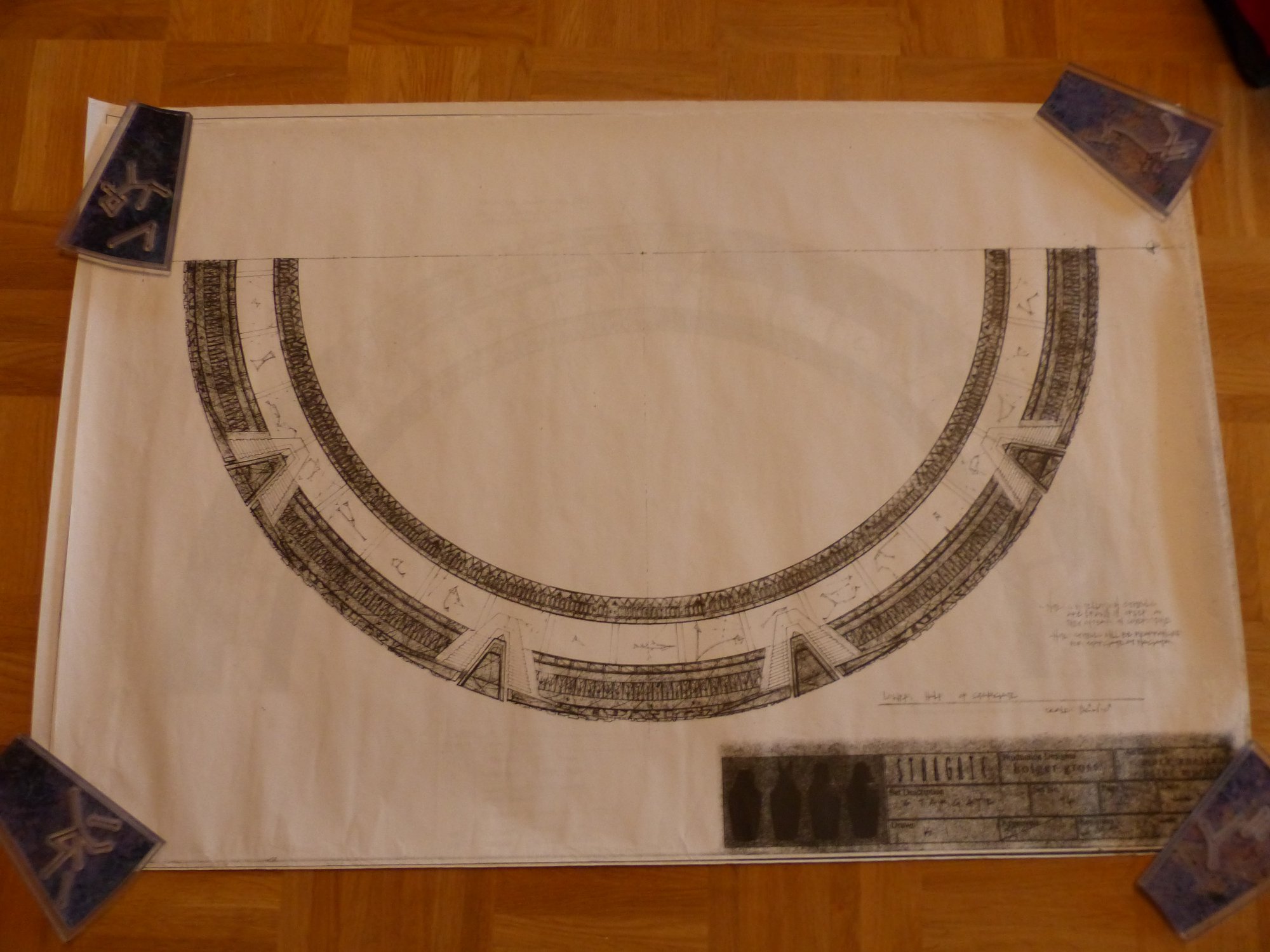
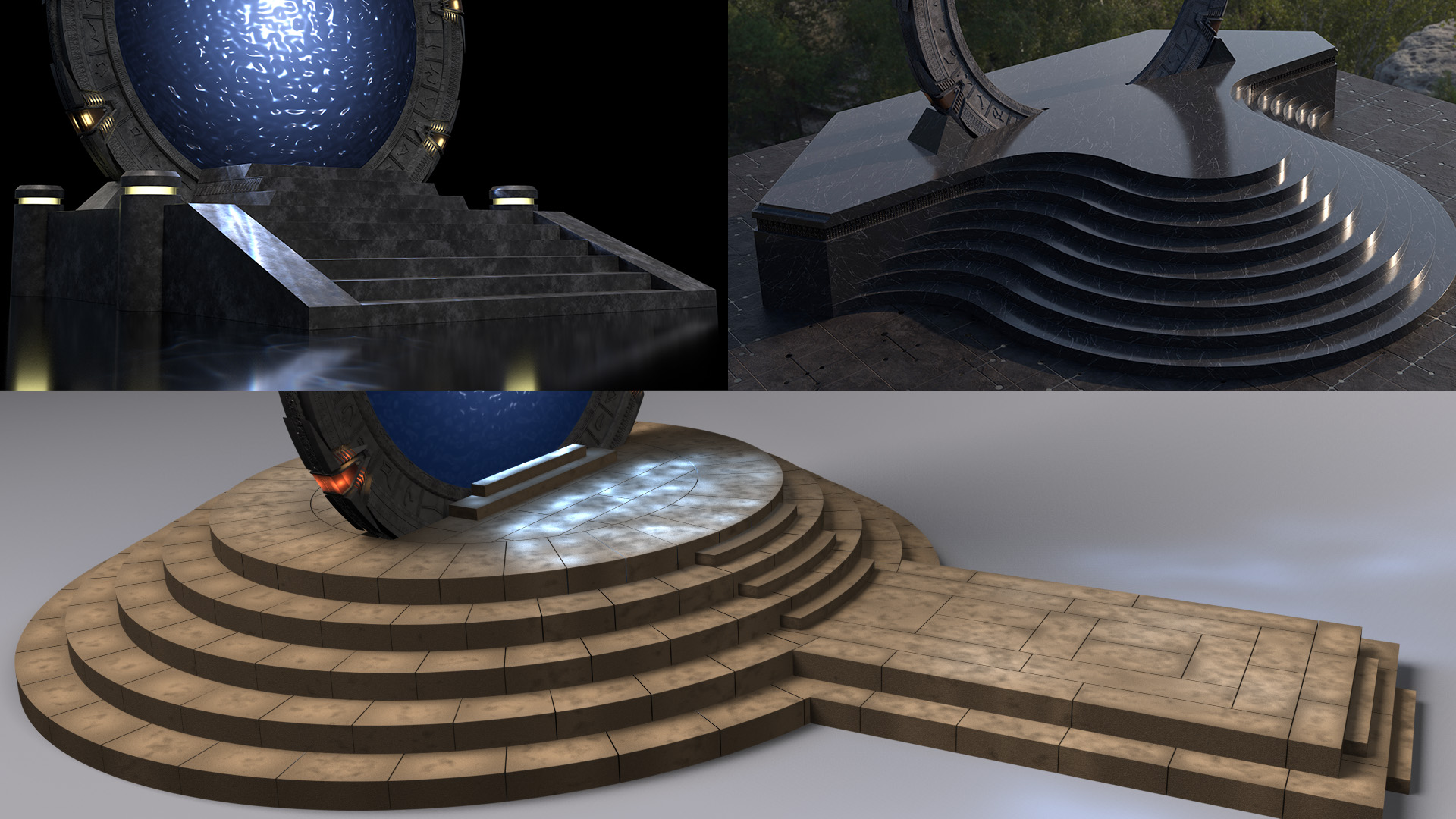
I’ll be illustrating this article with a mixture of screencaps, production documents, and photos of the original setpieces. The latter two groups are sourced from behind the scenes posts by production personnel, auction listings, and individual collectors, most notably, Les Enfants de MacGyver. If you’re collecting reference material for your own movie- or SG-1-style stargate, there are countless photos of their original stargate components, disassembled and close-up, on their Facebook page.

The first thing to know is that all these stargates are made of nine identical segments which join together in the middle of each of the nine chevrons. There’s also an animated inner ring that contains some number of symbols which move within the stargate when a destination address is being entered.

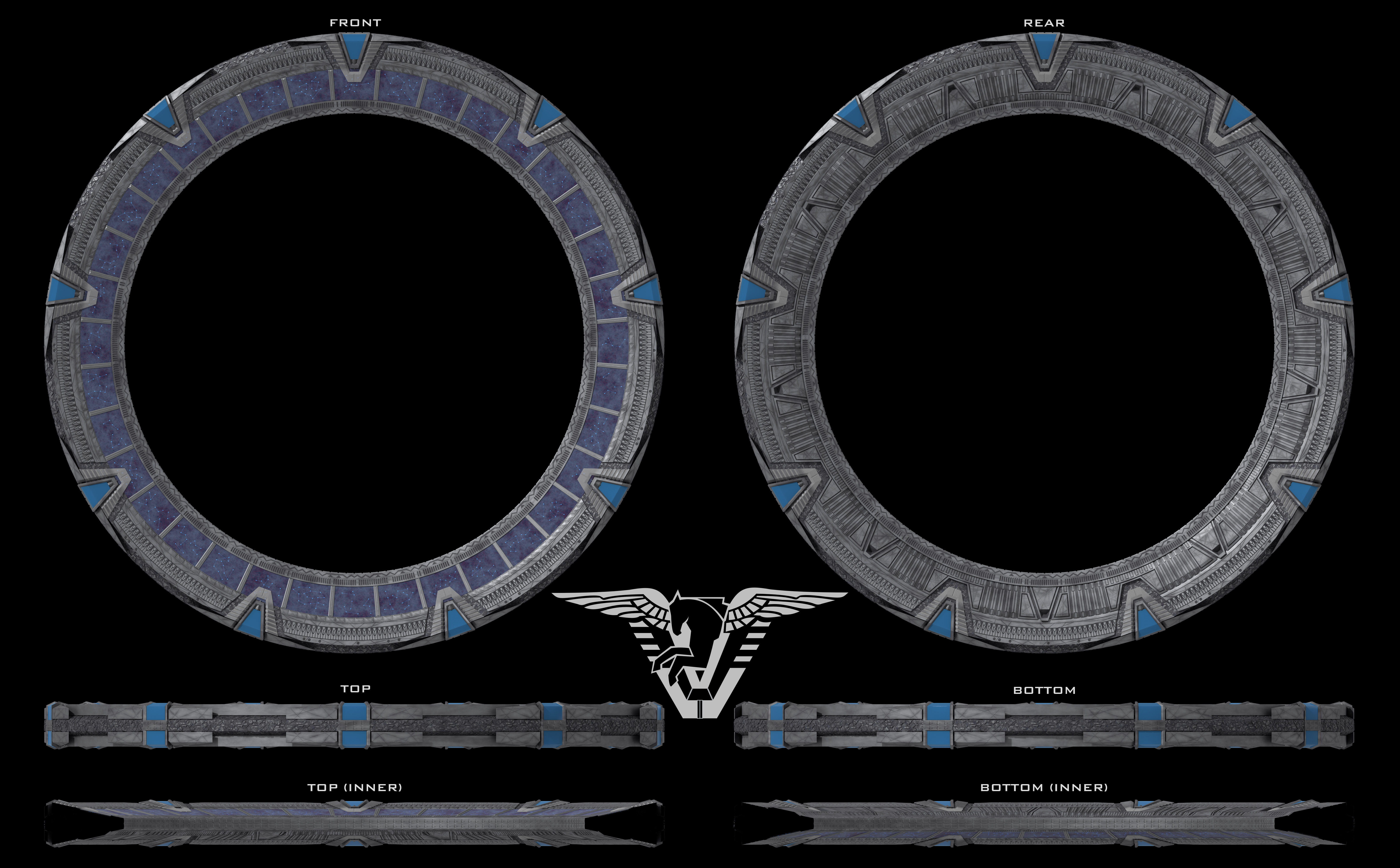
The front face has several sets of repeating details. At the top are six irregularly spaced “buttons.” Immediately below that is a track of “arches.” There’s a series of blocks below them, just above the inner ring. Each block has two interlocking segments with an S-shaped seam between them. On the movie and SG-1 gates, there’s a set of smaller blocks on the bottom edge of the inner ring.

Below that are three tracks of engraved details. The top is a series of pill-shapes in clusters separated by circular dividers. Below that is a simple set of engraved rectangles, and below those are a pair of engraved lines that go around the inner rim in a zig-zag pattern, offset with occasional horizontal segments.
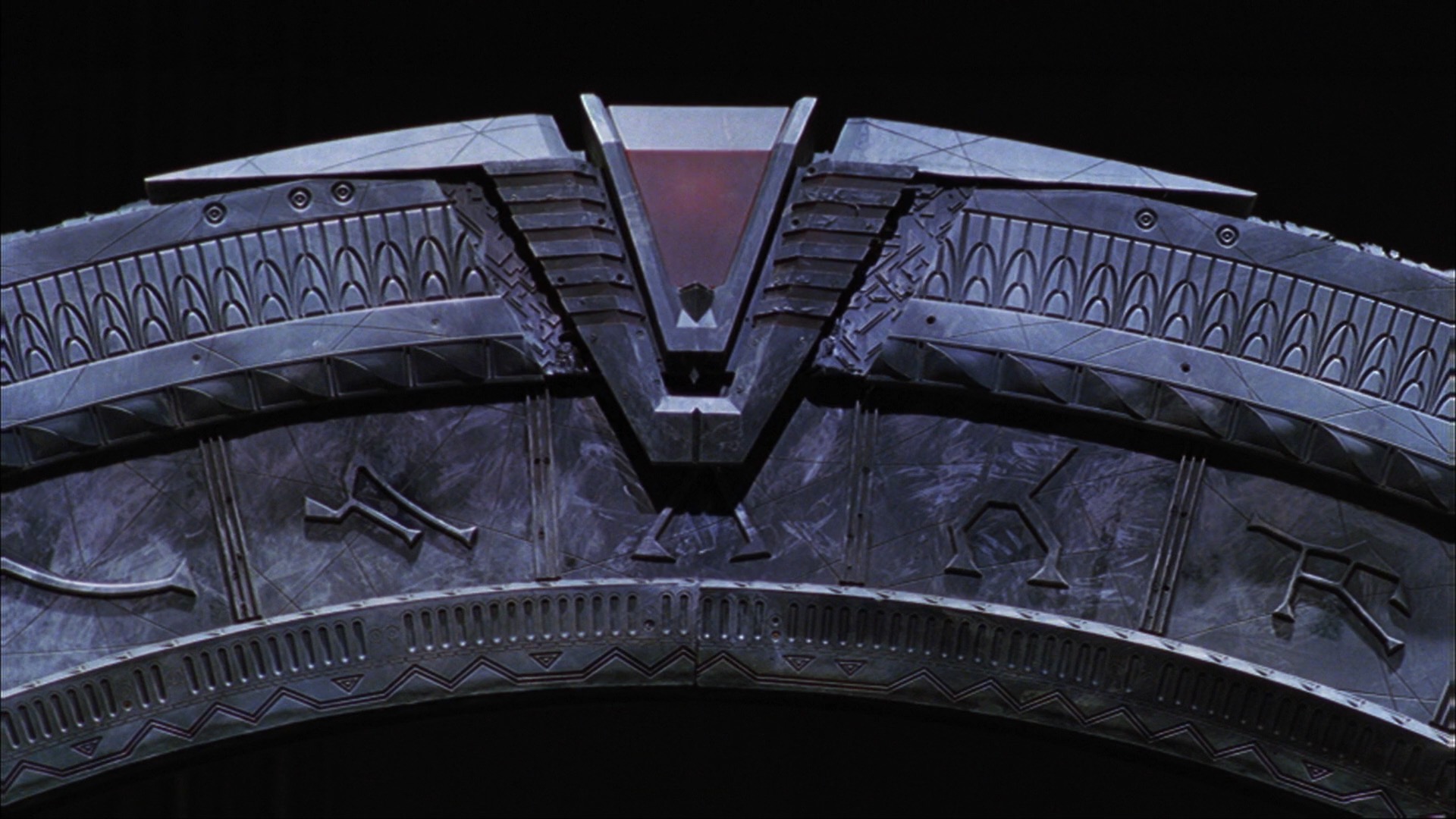
The inner rim has regularly spaced “emitters” which consist of three long greebles.
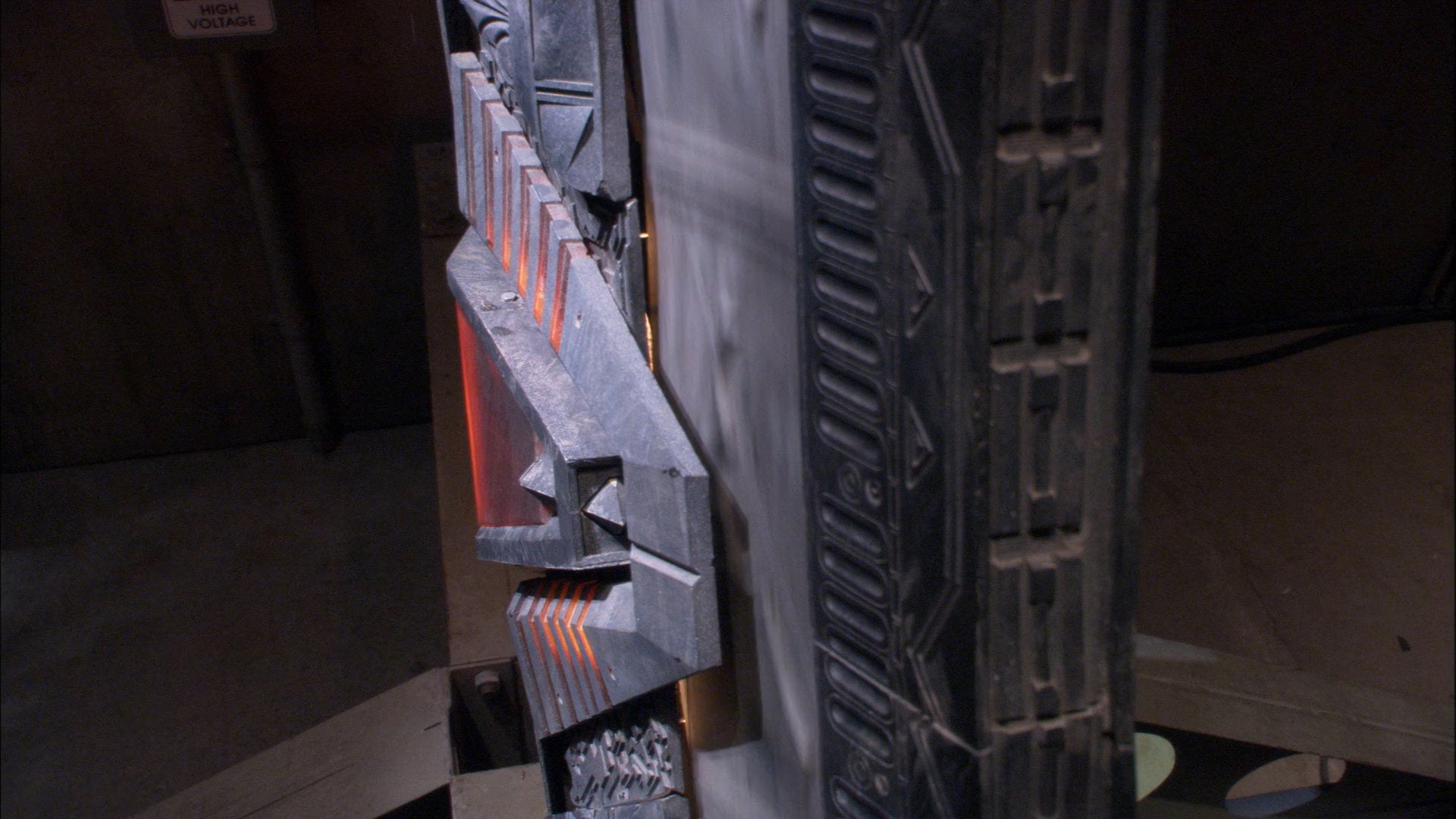
The rear face is similar to the front face, but omits the S-blocks, and the inner ring is replaced with a sort of conduit. The outer rim has an extension around the middle which is covered in an elaborate mosaic pattern.
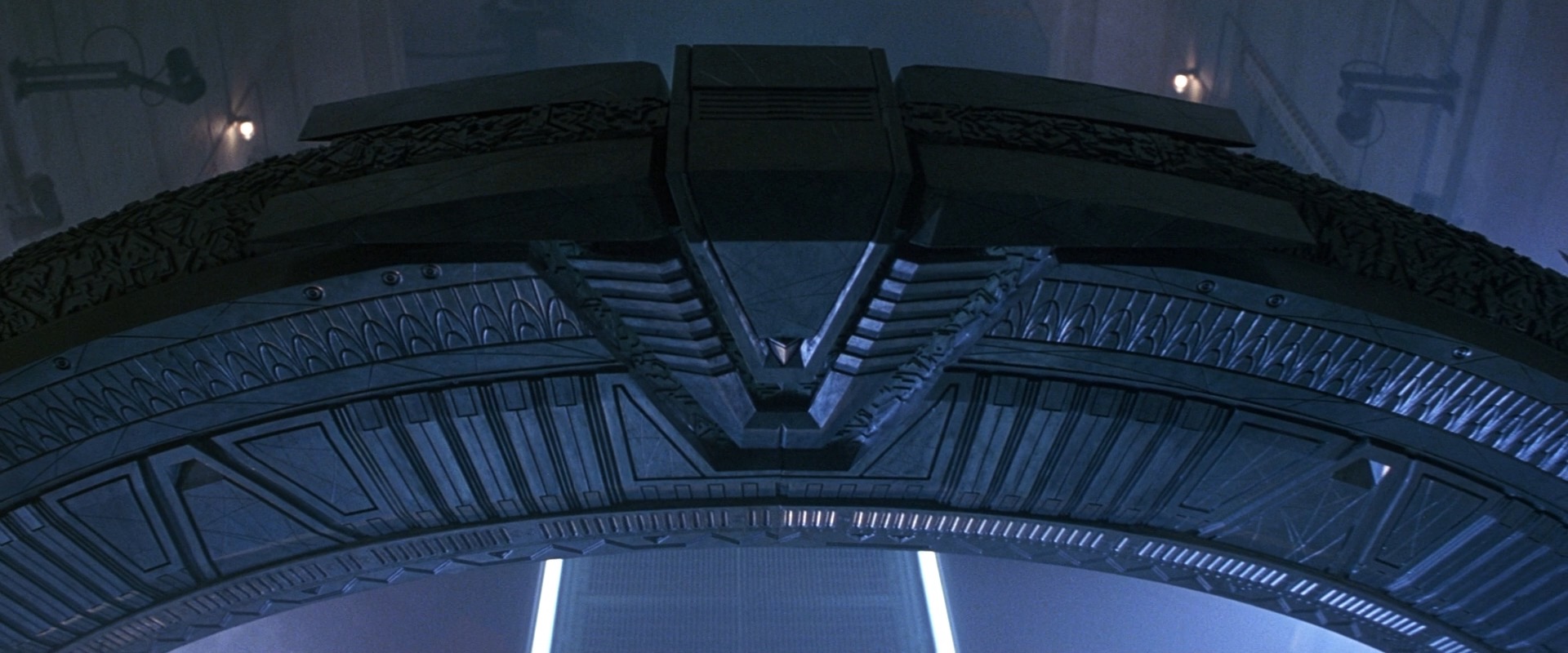
There are nine chevrons equidistantly positioned around the ring. Each chevron consists of a clamp which is set inside a slot. The slot also has a mosaic pattern inside it. Above the chevron is a jewel1I call to the jewel the “Chevron Block” in my models, and the clamp simply the “Chevron,” but I’m using terminology from the production of the film for clarity in this article, rather than having the words “chevron” and “block” refer to multiple objects. Above the jewel, level with the rim, are four “wings.”

The stargate’s outer diameter is exactly 20 feet. The ring itself is 2.5 feet thick, making the inner diameter 15 feet. Since you’ll probably be building out from the centerpoint using lathe and array tools in a 3D program, here are those figures as radii:

Outer radius: 10 feet / 3.048 meters
Inner radius: 7.5 feet / 2.286 meters
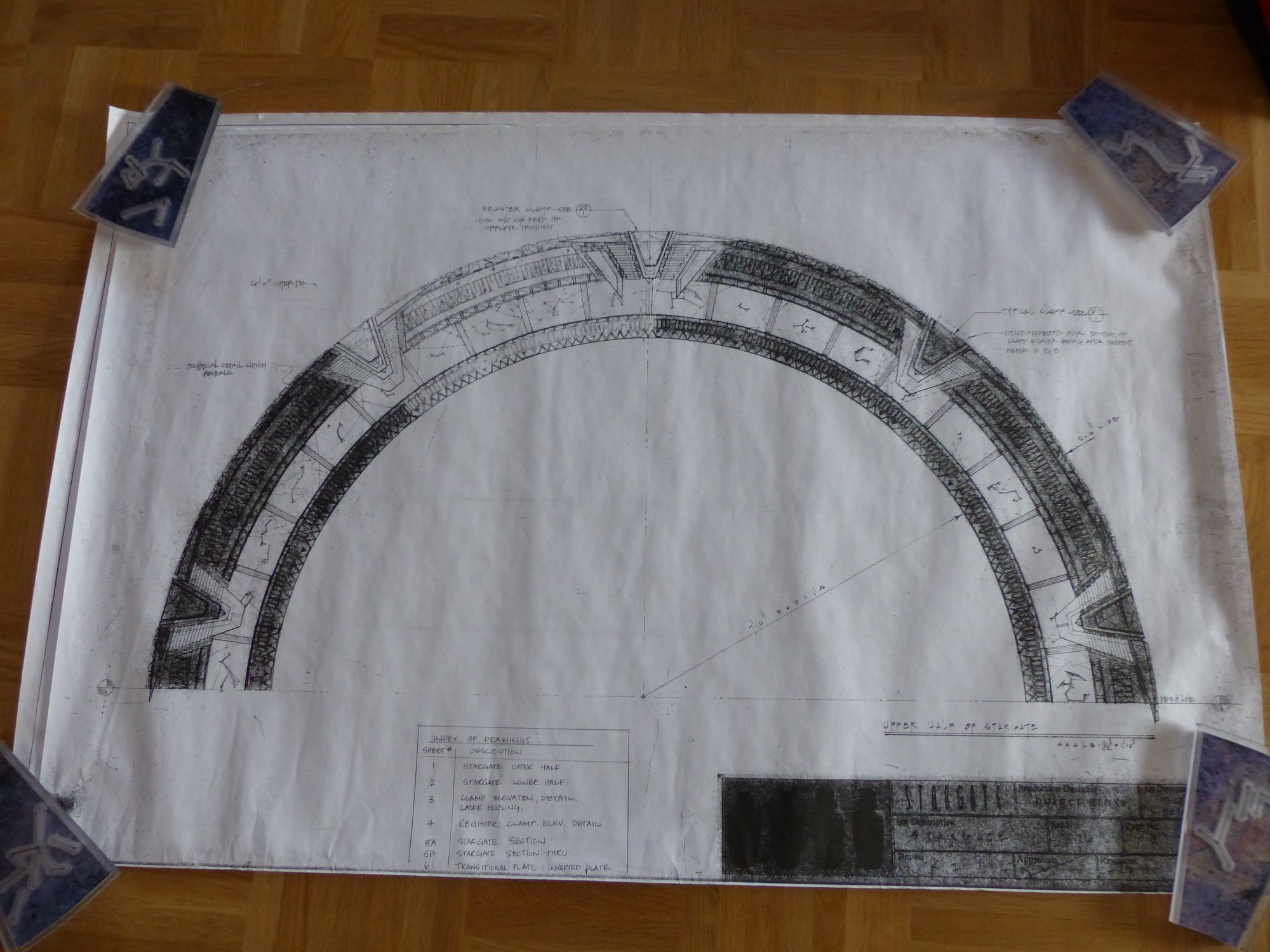
The first two stargates were ultimately hand-constructed, and may not exactly match the designed measurements, so I’m going to avoid any further figures, and explain the sizes of all the elements in relative terms.

Continue reading

References
1 I call to the jewel the “Chevron Block” in my models, and the clamp simply the “Chevron,” but I’m using terminology from the production of the film for clarity in this article, rather than having the words “chevron” and “block” refer to multiple objects.

Stargate Puddle Image and Animation for Physical Models

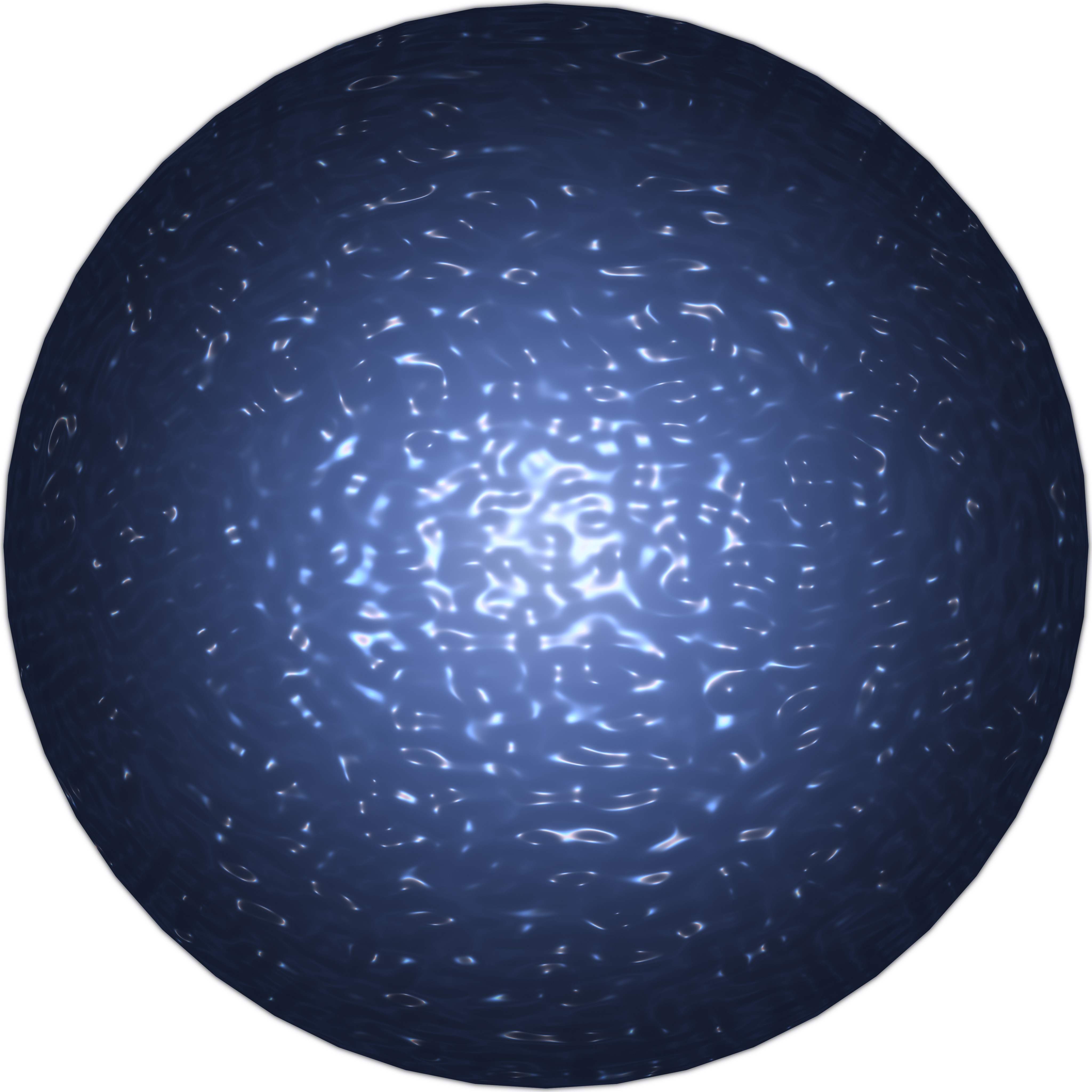
With the recent release of the SG-1 and Atlantis Stargate desktop models from Master Replicas, I’ve seen more than a few people asking for images of the puddle effect they can print and insert into their model to make it appear to be active.

While a production-used animation loop of the puddle is available online,1This video was included in a large library of leaked video playback, and was used for the rear-projection puddle screen used to show the Stargate active in the background of scenes when people weren’t walking through it it’s compressed and relatively low-resolution. I rendered off a 4K image of my version of the puddle effect which should look a bit better printed .

PNG Version (10.3 MB)

EXR Version (Zipped, 159 MB)2Are there HDR printers? Just in case.

A lot of people are also using miniprojectors to make a live puddle on their models. I’ve uploaded a 38 minute puddle movie with opening, closing, and sound effects to YouTube. Here’s just the clip of the puddle loop by itself, if you’d rather download the file to run the movie indefinitely.

References
1 This video was included in a large library of leaked video playback, and was used for the rear-projection puddle screen used to show the Stargate active in the background of scenes when people weren’t walking through it
2 Are there HDR printers? Just in case.

Stargate 2020 Effects (Film Version)

The Stargate VFX from the original film, my recreation, and a side-by-side comparison

“Stargate 3.0 Effects (Film Version)” for Lightwave 2020, Released December 25, 2021 (CC0) —142 MB

After a year and a half, I’m running out of steam on the Stargate project for now, so I pushed myself to finish up the part I was currently working on, the version of the “kawoosh,” “strudel,” and “puddle” effects as seen in the movie.

Continue reading

Stargate 2020 (Pegasus Version)

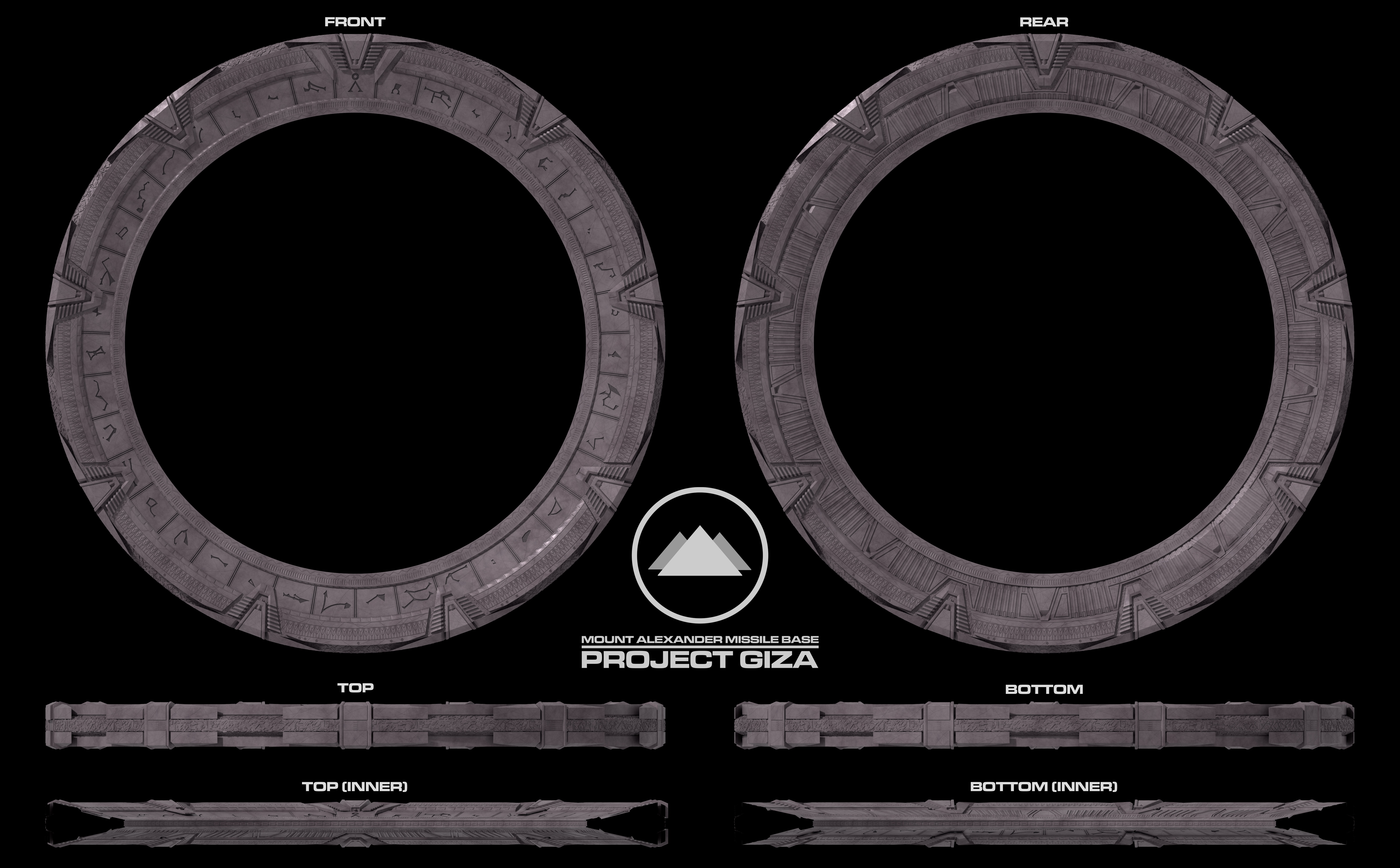
Orthographic diagrams of the model1Atlantis Expedition Logo by CmdrKerner
Showcase animation of the model and effects

“Stargate 3.1 (Pegasus Version)” for Lightwave 2020, Released July 30, 2021 (CC0) —53 MB

Conversion Kits:

After over a year, I’ve reached the end of my 2020 pandemic modeling project with the completion of the version of the stargate used in Stargate Atlantis. Alongside the movie and SG-1 versions, that makes a complete set for this basic design.2The Universe version being a totally different design, and the Origins version being intended to match the movie version, even if it didn’t quite hit the mark perfectly. While I don’t think I’m quite done with Stargate just yet, I’m probably done with modeling actual stargates for a while.

Continue reading

References
1 Atlantis Expedition Logo by CmdrKerner
2 The Universe version being a totally different design, and the Origins version being intended to match the movie version, even if it didn’t quite hit the mark perfectly.

Stargate 2020 (Milky Way Version)

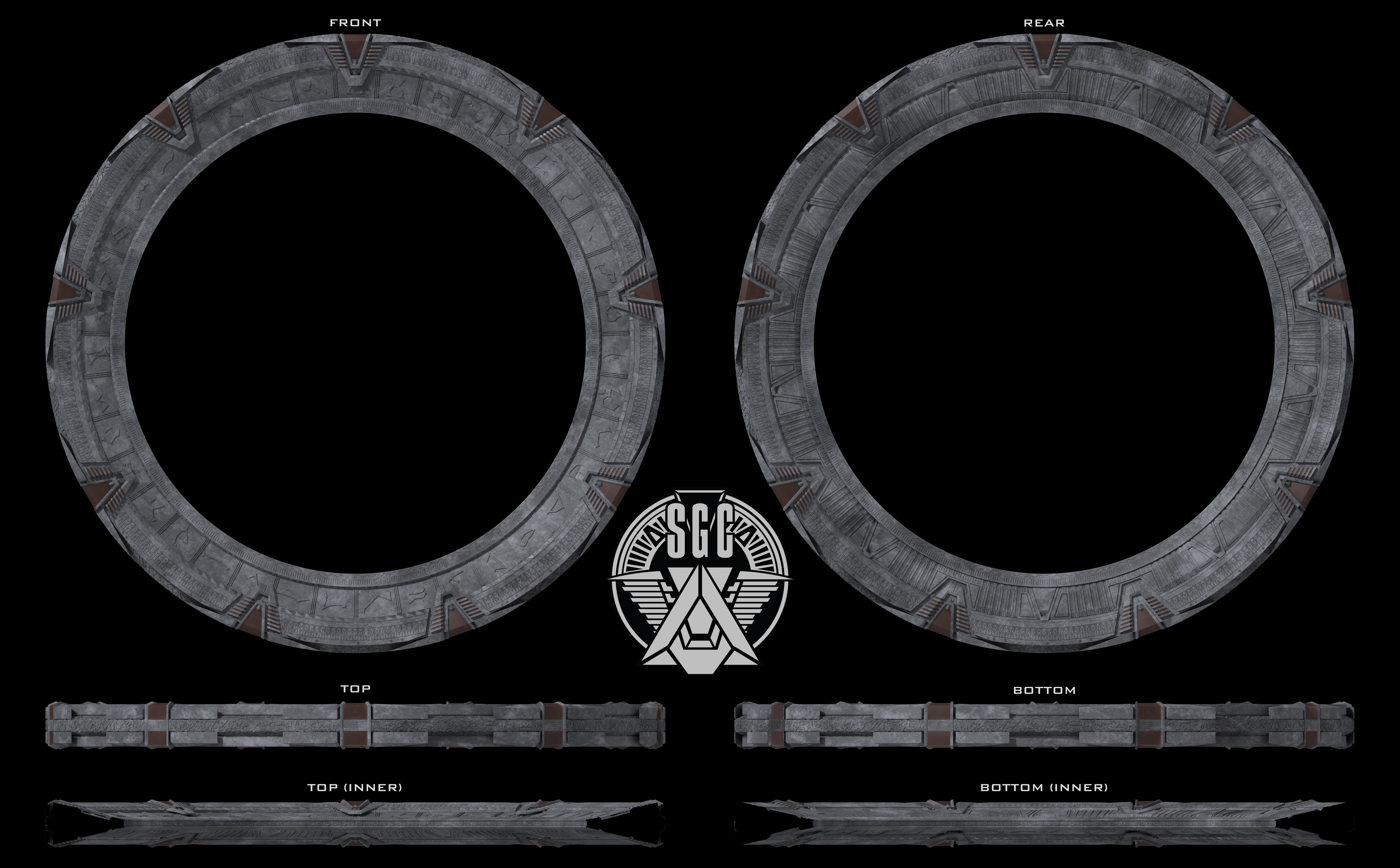
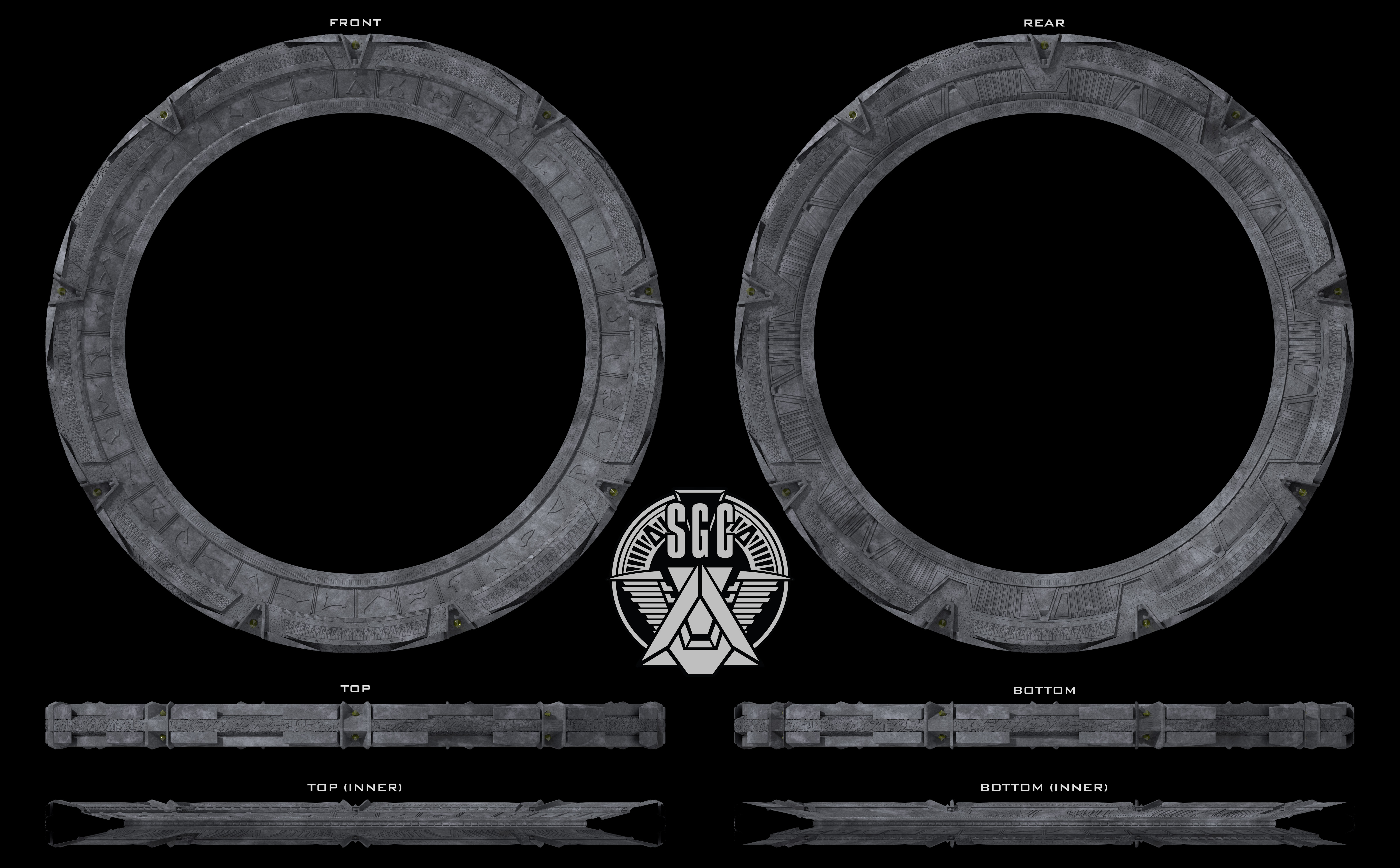
Orthographic diagrams of the model1SGC Logo by mikepjr
Orthographic diagrams of the model with chevrons omitted
Showcase animation of the model and effects

“Stargate 3.0 (Milky Way Version)” for Lightwave 2020, Released March 28, 2021 (CC0) —80 MB

Conversion Kits:

Main Model

Inner Rings With Alternate Origin Symbols

Continuing with my work on building a new stargate model, and in advance of the Atlantis-style ‘gate, we have the flagship version, the stargate as it appeared in the series Stargate SG-1, give a take a few alterations and enhancements.

Continue reading

Tech the Tech: How to Dial a Stargate

Or, “Mother, the chevrons are locking!”

Considering it’s just a big, spinning wheel, there’s actually a surprising amount of ambiguity about exactly how the Milky Way version of the Stargate dials. The basics are obvious. There’s an inner ring, which rotates alternatively clockwise and counterclockwise to indicate specific symbols on it, each of which is represented by one of nine corresponding chevrons on the main ring of the device. The chevrons are numbered one through seven, proceeding clockwise, ending with seven at the top, and skipping the bottom two chevrons.1In the subsequent television shows, we saw eight- and nine-chevron addresses. The nine-chevron address engaged each chevron in clockwise order, with the bottom-right chevron becoming chevron four and the normal chevron four being chevron six, and so on. The implication in “The Fifth Race,” the first episode where it was done, is that the first six symbols encode under the normal chevrons, while the additional seventh symbol encodes at the bottom right chevron (briefly seen on a computer screen), with chevron eight at the top, which is confirmed by comparing the visible symbols on the Atlantis stargate in the episodes “No Man’s Land” and “The Pegasus Project” with the published eight-symbol address for Earth.

So the question left is, exactly what position on the main ring indicates which symbol is being encoded or locked by a given chevron?

Continue reading

References
1 In the subsequent television shows, we saw eight- and nine-chevron addresses. The nine-chevron address engaged each chevron in clockwise order, with the bottom-right chevron becoming chevron four and the normal chevron four being chevron six, and so on. The implication in “The Fifth Race,” the first episode where it was done, is that the first six symbols encode under the normal chevrons, while the additional seventh symbol encodes at the bottom right chevron (briefly seen on a computer screen), with chevron eight at the top, which is confirmed by comparing the visible symbols on the Atlantis stargate in the episodes “No Man’s Land” and “The Pegasus Project” with the published eight-symbol address for Earth.

Stargate Command Plaque

“SGC Logo Plaque” for Lightwave 2020 (FBX & OBJ Included), Released March 15, 2021 (CC0)—279 KB

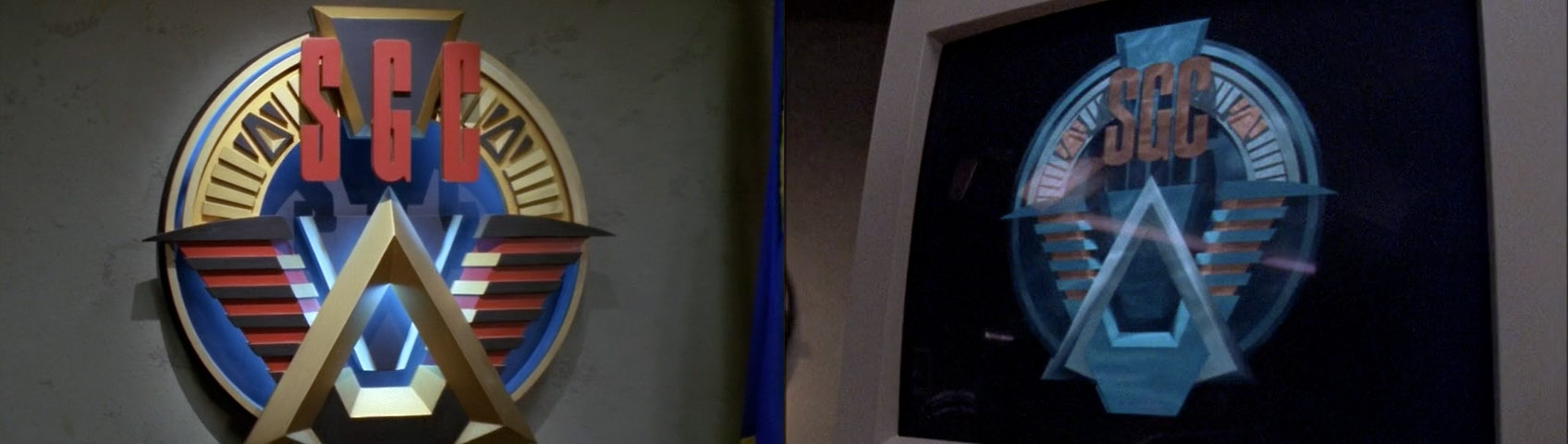
As a quick little side-project, the other night I built the SGC Plaque. Joseph Mallozzi, who was a writer and producer on the TV shows, has been posting high-res behind-the-scenes photos, concept art, and documents since the shows were still on the air, and recently posted a construction diagram of the plaque, which made it pretty easy to model in only an hour or two, most of which was spent squinting at the measurements and comparing with some photos of the finished plaque to see how things changed between the drawing and the actual piece.

There was also a 3D rendered version used on the show as a screensaver and decorative element on computer displays which was colored differently, so I made both versions. I didn’t sweat getting the textures exactly right (and there were some shape differences with the digital version I didn’t bother changing), just going for the spirt instead of a perfect duplicate. The gaudy ’90s texturing is pretty rough, and now we’ve entered a glorious era where flat color in CGI actually look okay.

The physical and digital versions of the plaque on the show

Stargate 2020 (Film Version)

Orthographic diagrams of the model
Alternate views with the chevrons locked, and unobstructed views of the Earth and Abydos versions of the inner ring glyphs
Showcase animation of the model and effects.

“Stargate 3.3 (Film Version)” for Lightwave 2020, Released April 13, 2026 (CC0) —40 MB

Conversion Kits:
FBX Version (CC0)—81 MB
FBX Animation Templates (CC0)—0.1 MB
OBJ Version (CC0)—74 MB
Texture Reference (CC0)—24 MB

Since last summer, I’ve been working on a new 3D model of the stargate in Lightwave, my third attempt. Since I last built a stargate model in 2006 (with small updates afterward), my skill as a modeler has increased, and reference material is far more plentiful. That includes behind-the-scenes photos, low-res but still useful construction diagrams from auction websites, HD home video releases of the movies and television shows, and, most importantly, high-res photos from Les Enfants de Mac Gyver, a group creating a duplicate of the SG-1 stargate setpiece using pieces of the screen-used version purchased at auction as well as their own copious research. There are many sections of this model where I simply wouldn’t have been able to even guess at what went where without their detailed and plentiful photos of their stargate being assembled, disassembled, and otherwise worked on.

Continue reading